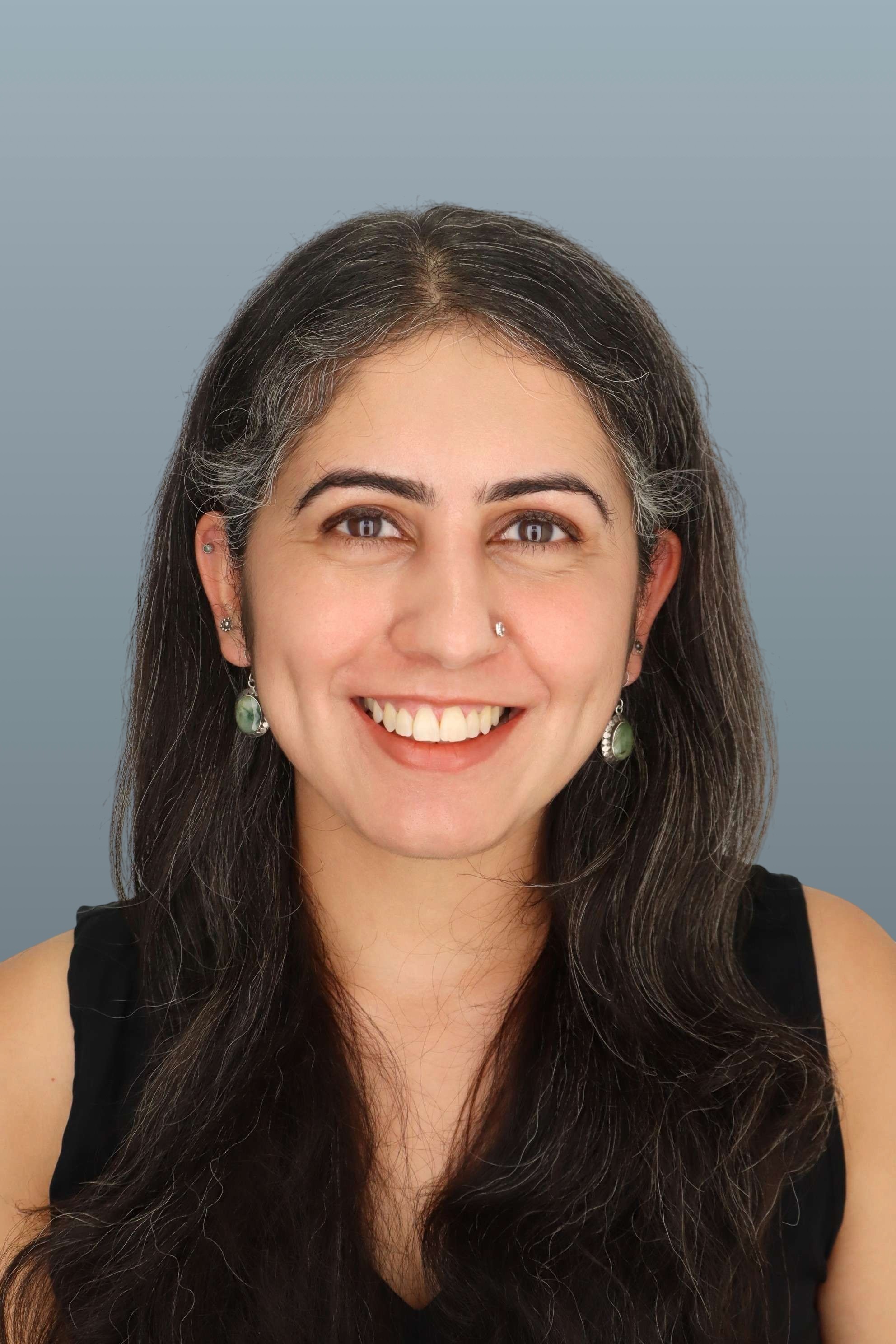
I am a PhD candidate in Applied Economics and Management at Cornell University. My research focuses on labor, health, and development economics.
I am on the 2026-27 job market.
Abstract: Informal labor markets in developing countries are infamous for poor working conditions, ranging from delayed payments to verbal abuse. Why do poor quality employers persist in informal labor markets? This paper studies the role of information frictions in sustaining low quality employment relationships in spot labor markets in India. Using field experiments with 431 casual construction workers in Chennai, I first show that workers place substantial value on employer quality, including respectful treatment, timely payment, and not being cheated. Workers demand an average premium of INR 352, approximately 32 percent of daily wages, to work for a lower-rated employer, despite facing a meaningful risk of not finding work on a given day. I then demonstrate that information about employer misconduct diffuses poorly among workers in this tightly knit labor market where workers and employers meet every day. I find that negative employer experiences are significantly less likely to be shared than positive ones, particularly when the identity of the person sharing information is revealed. Mechanism experiments offer suggestive evidence that fear of employer retaliation and concerns about the signal strength of individual experiences may play a role in limiting the transmission of negative information. These findings demonstrate the limitation of reputation as a disciplining mechanism for employer behavior even when formal enforcement is absent.
Cornell Center for Social Sciences, Einaudi Center for International Research, Cornell Center for the Study of Inequality, Hatfield Award for the Study of Ethics in Business, IHS Humane Studies Fellowship, The International Growth Center, Tata-Cornell Institute
Behavioral Research in Economics Workshop India Meeting 2025, Pacific Conference for Development Economics 2026, Economic Science Association World Meetings 2026, Agricultural and Applied Economics Association Annual Meeting 2026, Advances with Field Experiments 2026, Northeastern Universities Development Consortium 2026, Southern Economic Association Annual Meeting 2026
Seasonal Disease Incidence and Antibiotic Overprovision: Evidence from India
Abstract: Antimicrobial resistance is a growing public health concern whose burden falls disproportionately on low- and middle-income countries. Antibiotics are effective against bacterial infections but not viral illnesses. Yet when symptoms are difficult to diagnose and antibiotics are readily available over the counter, increases in viral disease may also generate antibiotic use. In this paper, I ask whether India's monsoon season—which brings a predictable rise in viral illnesses like dengue—is followed by higher antibiotic consumption. I combine monthly pharmaceutical sales from 2011 to 2020 with high frequency rainfall data and use variation in the timing and intensity of the monsoon to study changes in drug demand. Antibiotic sales rise after monsoon rainfall. To assess whether this pattern reflects a general increase in drug purchases during the rainy season, I compare antibiotics with other drugs used to treat infections. I find no statistically significant average effect among the other drugs, making a broad increase in pharmaceutical demand a less likely explanation. The results are consistent with diagnostic uncertainty and over-the-counter dispensing contributing to excess antibiotic use.
Southern Economic Association Annual Meeting 2025, American Society of Health Economists Annual Meeting 2026
Abstract: We develop and test gender attitude measures conducted with a school-based sample of adolescents aged 14–17 years in India. We test a measure with survey items and vignettes to capture gender-based value and stereotypes, an Implicit Association Test (IAT) capturing gender-based value, and an IAT capturing gender stereotype. All demonstrate good internal reliability, and both IATs are significantly associated with our survey measure suggesting criterion validity, though not confirming it due to the lack of a gold standard measure on gender attitudes. Finally, construct validity is indicated from the measures’ positive significant associations with higher girls’ mobility and education. The gender-related IAT tools developed are consistent and valid, and modestly correlated with gender-related behavior outcomes such as mobility and school enrolment.
Works in Progress
Environmental Stress, Employer Behavior, and Worker Welfare in Informal Labor Markets, with Avantika Prabhakar (slides available upon request)
Abstract: Research on extreme heat has documented its effects on health, cognition, conflict, and productivity, but much less is known about how environmental stressors shape workplace interactions, even though employer conduct is central to worker welfare. This paper links daily temperature and air quality measures to detailed survey data from informal construction workers in Chennai, India, to study whether workers face delayed payments, disrespectful communication, denial of basic workplace amenities, and lower well-being on hotter and more polluted days. Our empirical strategy exploits day-to-day variation in environmental conditions around each labor stand, controlling for worker fixed effects, day-of-week effects, and time trends to ensure estimates are not driven by persistent differences across workers or locations. If heat and pollution increase employer mistreatment or discourage workers from reporting it, the costs of climate change extend well beyond output losses, and standard productivity measures will understate its welfare effects.
Empowering Vulnerable Populations through Digital Mental Health Solutions: Evidence from Garment Factory Workers, with Avantika Prabhakar
Abstract: We study the channels through which mental health and psychological well-being affect labor productivity and worker retention among manufacturing workers in India. Informal workers operate outside formal labor market institutions and social protection systems, and face elevated risk of psychological distress due to social isolation and the high stigma and transaction costs of accessing formal mental health services. In a randomized controlled trial, we offer workers free access to a mobile, AI-powered mental health application that provides personalized, interactive support for managing stress and building emotional resilience. A second arm offers traditional in-person psychosocial support, allowing us to compare modes of care that differ in cost, access, and perceived stigma. We measure take-up and usage, as well as effects on mental health, productivity, job retention, and subsequent labor market outcomes. High-frequency surveys allow us to examine three mechanisms: beliefs about the returns to effort, optimism and aspirations; cognitive and behavioral change; and social relationships and help-seeking behavior. This allows us to understand how different modes of mental health care affect labor productivity, and whether digital, AI-based tools can complement or substitute for traditional care where formal access is limited.
Heat Adaptation in India’s Manufacturing Industry, with Simoni Jain and Avantika Prabhakar
Abstract: Rising temperatures threaten both workers and firms, increasing fatigue and health risks while reducing attendance and productivity. Heat stress is projected to cost India the equivalent of 34 million full-time jobs by 2030. Yet technologies that reduce workplace heat exposure may remain underused even when their combined benefits exceed their costs. We partner with a manufacturer of wearable cooling equipment for high-temperature workplaces, and ask two questions. First, do firms view workplace cooling as a worker amenity, a production input, or both, and how are its health and economic returns distributed and perceived among workers, hiring contractors, and firms? Second, does the structure of labor contracting prevent adoption even when cooling is jointly cost-effective? To answer these, we test incentive-compatible contracting arrangements to understand sustained adoption of heat adaptation technology.
Teaching
Cornell University
Teaching Assistant, AEM 3320/6325 Leadership and Management in SportsUndergraduate; Fall 2026
Teaching Assistant, AEM 7021 Applied Microeconomics II: General EquilibriumPh.D.; Spring 2025
Teaching Assistant, AEM 2350 Introduction to the Economics of Development
Winner of Dyson Graduate Teaching Assistant Outstanding Service Award, 2023Undergraduate; Fall 2024, 2023, 2022
Teaching Assistant, AEM 2020/PSYCH 2940 Better Decisions for Life, Love and MoneyUndergraduate; Spring 2023